On Saturday, 14th June this year, completed a diploma in Integrative Psychosexual therapy at The Centre for Psychosexual Health. For me, a wonderful two years of learning and development. This has further enabled me to work with clients’ psychosexual health issues, doing so in an integrative, holistic way, appreciative of diverse sexualities.

The diploma espoused a new model for the understanding of human sexuality and psychosexual health which encompasses the body, mind, brain and heart, as well as the social and cultural environment.

Over the two years we explored clients sexual issues in terms of their therapeutic meaning and potential, rather than as ‘dysfunction’. It included sexual education, information and self help tools.

It included supporting clients within a therapeutic relationship to rediscover themselves sexually and to develop a more conscious sexual self-esteem.

If you have concerns about any aspect of sex or sexuality either for yourself or within any relationship please get in contact.

This looks very interesting. Hope it leads to something positive for the LGBTQ+ community.

Pink News has a wonderful article on this:

Leaders from every major religion join forces to support LGBT community

The Ozanne Foundation, which works with religious organisations around the world to support LGBT+ people, has marked the end of Pride Month by launching the UK’s first inter-religious advisory board focused on fighting discrimination.

The panel’s nine members span across the main UK and Irish religions – Judaism, Islam, Sikhism, Hinduism, Buddhism and Christianity – as well as representing the Christian denominations of Catholics, Quakers, Baptists and Methodists. 

The board will learn from the experiences of religious groups that affirm same-sex couples like the Quakers, represented by Hannah Brock Womack who was blocked last year from becoming president of Churches Together in England (CTE) because she is in a same-sex marriage, and develop strategies to promote inclusion within their own religious communities.

I hope I’m not being preemtively too generous with praise for the Guardian today launching Genderqueer generation, a series of stories centered on, and often told by, the children and young adults who are rejecting traditional gender identities.

Their first article on being non-binary, makes the series look promising. It begins by asking four young people to describe how they realized they were non-binary.

“Well, it’s my body. It’s my identity. It’s how I feel. It’s not how you feel.”

As the article askes: Who decides your gender?

A growing number young people say it is up to them. Rejecting traditional markers of “male” or “female”, they prefer identifying as “genderqueer”, which refers to people who don’t fall squarely within the gender binary. Coming out as non-binary, using they/them pronouns.

Non-binary people feel they are widely misunderstood, facing prejudice. For example, Donald Trump, recently decreed that protections against healthcare discrimination were to be applied based exclusively on biology rather than one’s inner sense of gender.

For further information I explore gender here.

I find it interesting how my mind link things that remind me of experiences had. The other day I was thinking, I now have two out of three main Apple products – an iPod, plus an MacBook Air. Will the iPhone come later, completing the set? This led me to the song by Meat Loaf, “Two Out of Three Ain’t Bad”. This led me to an occasion where a friend likened this song to a relationship he had with a girlfriend.

Back in the early 1990s I was working as a computer operator in Glasgow for an oil company. For several night shifts this friend would talk to me while I listened, as he laid out his confused feelings for this lady. He said he felt his relationship with her was like the song, “Two Out of Three Ain’t Bad”. Not sure why he choose me to talk to so openly, being quite vulnerable. Perhaps knowing I was near completing an OU degree in psychology was a prompt? He later expressed appreciation for the time spent sharing. This experience, along with coming to the end of the degree in psychology was one of several that led me evetually to further train and work as counsellor/therapist, as I am today. So thanks to that friend.

The song is below for anyone who may not have ever heard it. Or perhaps you may want to listen again 😎.

With the recent lockdown due to the Coronavirus all my counselling sessions are currently online using Zoom. I’ve been using my iPad with a pair of headphones. All works well. Though recently purchased a pair of iPods, to use in counselling/therapy sessions instead of the headphones. I am amazed at the difference they make. The quality of sound is wonderful. So much clearer, plus with the noise cancellation on there are no distractions. It feels more like being in a room with a client.

Recently finished reading the book titled above, written by Meg-John Barker and Justin Hancock. Many things struck me. In particular consent. How in many instances, even in long term relationships, it is assumed, rather than discussed between partners. The concluding chapter, Communication and Consent, goes into detail about what real consent is, giving ideas for discussing this with partners. There is a wonderful analogy of shaking hands and consent. I’m not going to detail that here. I encourage you to either buy the book or get a copy from your local library.

A quote from the book:

“So my therapist said to me, ‘No one gets to dictate what your kink looks like and you don’t have to run around seeking other people’s approval for who you want to be in the scene or in your life.”

The idea, to me, sounds similar to:

“don’t yuck someone else’s yum.”

Sexplanations by Dr Lindsey Doe

There has been / is / will continue to be much debate about the recent Alabama change in the abortion law there. Whilst I’m in the UK, as many of those reading this blog, they may be a thought from some that it’s not relevant here to post about. I don’t full understand the American political process so I’m not going to comment directly on the law itself. Except from my limited experience, it seems crazy.

However, one of the causes of unwanted pregnancy, which is where the need for abortion often arises from, both in the US, the UK and in all other parts of the world is lack of sex education. There is often the idea that too detailed information will result in young people suddenly going out having sex. Not the case. If anything education demystifies everything, often removing the desire to do something not known about.

The YouTube video above by Dr Lindsey Doe explains the benefits of sex education. At the end it lists resources available in the US. Often it is thought that abstinence education is sufficient. Dr Doe’s swimming analogy resonates. If you tell someone they shouldn’t swim, that will never help them ever to swim! There are multiple aspects of sex education on her YouTube channel.

Below is a link to a UK site, run by Justin Hancock, giving loads of information about sex, that is very worthwhile and educational for those over 14. All with a UK perspective, taking account of UK laws, etc. Justin covers such topics as, well there are so many!! One topic that I’m very interested in is consent. Justin has several articles on this. Have a browse here.

Another site worth a visit, for slightly older folks is https://megjohnandjustin.com/.

As a counsellor if you have any questions that is something I can help with. Whatever your gender, sexuality or relationship I am here to help.

Over the past year I’ve read a few trans* books. All excellent reads, for different reasons. There are of course many other wonderful and insightful books on being trans*. Others on my reading list include “Testosterone Rex” and “Delusions of Gender” by Cordelia Fine. Thanks to Georgia Williams for bringing these to my attention.

One great value for such reading material is enhancing and developing deeper empathy. Valuable not just for counsellors, but for society as a whole. Empathy and acceptance of each other go hand in hand. Looking beyond our own point of view is invaluable for a peaceful society and world. Thinking there is only one answer or way to be creates others. It leads to us and them thinking. It tends to generate “either / or” thinking. When the ideal is surely “and / plus” thinking. Whether you’re trans*, wonder if you are, know someone who is or wonders if they are, or think you don’t know anybody who’s trans* (because you probably do) these books will be invaluable resource for you.

Of particular importance is the acceptance of any name change, being willing to use it, plus the pronouns a trans* person may ask you to use. Most trans* people recognise this can initially be difficult and will be okay with genuine slip-ups in language. What is offensive is deliberate mis-gendering someone.

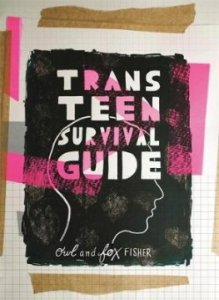
“Trans Teen Survival Guide”, cover below, I’d say is similar in approach to This Book is Gay, written, as the title says, for a younger audience. Included are the following chapters:

  1. So You’re Trans?
  2. Gender Roles Are Dead
  3. Telling the World (or not!)
  4. What Do I Call You?
  5. Being You (Whoever That Is)
  6. Dysphoria: The Monster
  7. Puberty and How to Cope
  8. Hormone Therapy
  9. Genitals, Parts, Junk – What Suits Best?
  10. Surgeries
  11. Dating as a Trans Person
  12. Awkward Trans Tales
  13. Dealing with the Media
  14. Documenting Your Journey
  15. Don’t Get Mad – Get Even!
  16. More Than Just Trans
  17. Self-Care and How to Help Others
  18. Hopes for the Future
  19. Resources and Cool People
  20. Appendix: Young Trans Kids and How to Support Them

Difficult to say which chapters are the best. Each individual will find certain chapters more relevant to their needs or desires. One thing that becomes apparent is there is no one way to be trans*. The mainstream media often give the impression it’s just about cutting bits (penis or breasts) from off one’s body. And sometimes it is. Owl and Fox Fisher outline many options available. Too many to detail here. Read their book. If you can’t afford it, see if you local library can get hold of a copy for you.

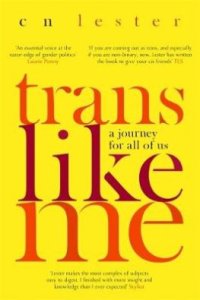
Another wonderful book is “trans like me” by cn lester. Written for an older audience, certainly not beyond a teenage readership. For me it felt slightly more personal, in that cn lester recounts their own experiences of growing up, discovering themselves. Again, recommended reading.


Many people struggle to understand what being trans* is about. Such books as these give brilliant insights into that. That it is nothing like what is often depicted in the mainstream media. Yet such media seems preferred by many, instead of going to what might be termed a source, someone’s lived experience.

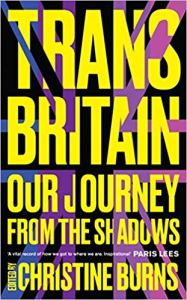
A third amazing book is “Trans Britain” by Christine Burns. The chapters are written by trans people who have experienced life in Britain over the past 50 years or so. It shows the progress made. Though lately there does seem a tragic reversal of trans acceptance in some areas of society. Yet, again,read this book to gain a greater understanding and appreciation of what it is being trans*.

I guess the title of this post could be offensive to some. It just happens to be the start of a book title. The full title being “The bi-ble – an anthology of personal narratives and essays about bisexuality“.

One thing becomes apparent through the book. Something known as bi-erasure, where the existence of bi-sexual people is discounted. You are either lesbian, gay or straight. No one is thought to actually be bi-sexual.

The idea of bi-sexuality seems to confuse some people. It is often thought that a person will identify as bi-sexual while on the way to discovering whether they are lesbian or gay. There is a scene depicted in Bohemian Rapsody that unfortunately implies this. I was reluctant to post about the film, until I discovered much of it is not historical accurate. So the conversation between Freddie and Mary may be not be factual. So spoiler alert.

Freddie and Mary had a wonderful relationship. Then, in the film, after Freddie returns from being on tour, they have an awkward conversation. Freddie says he thinks he’s bi-sexual, Mary responds, no Freddie, you’re gay. The idea of being bi-sexual is completely shut down. No disrespect meant to Mary, as then bi-erasure seemed the norm. The strange thing is all these years later attitudes don’t seem to have changed much!

Bi-sexuals are incorrectly seen as promiscious, incapable of commitment, a threat to relationships. Out of all LGBTQ+ people, bi-sexuals have mental health problems most frequently. The Bisexuality Report: Bisexual inclusion in LGBT equality and diversity found bi-sexual people are prone to higher rates of depression, anxiety, self-harm and suicide, all of which are embedded in bi-phobia and bi-erasure.

I’m left wondering what needs to happen for their to be full acceptance of bi-sexuality. Accusations of being greedy, confused and such, seem inappropriate. Of the bi-sexual people I know, I wouldn’t describe any in that way. A case for more acceptance, by all, for all?